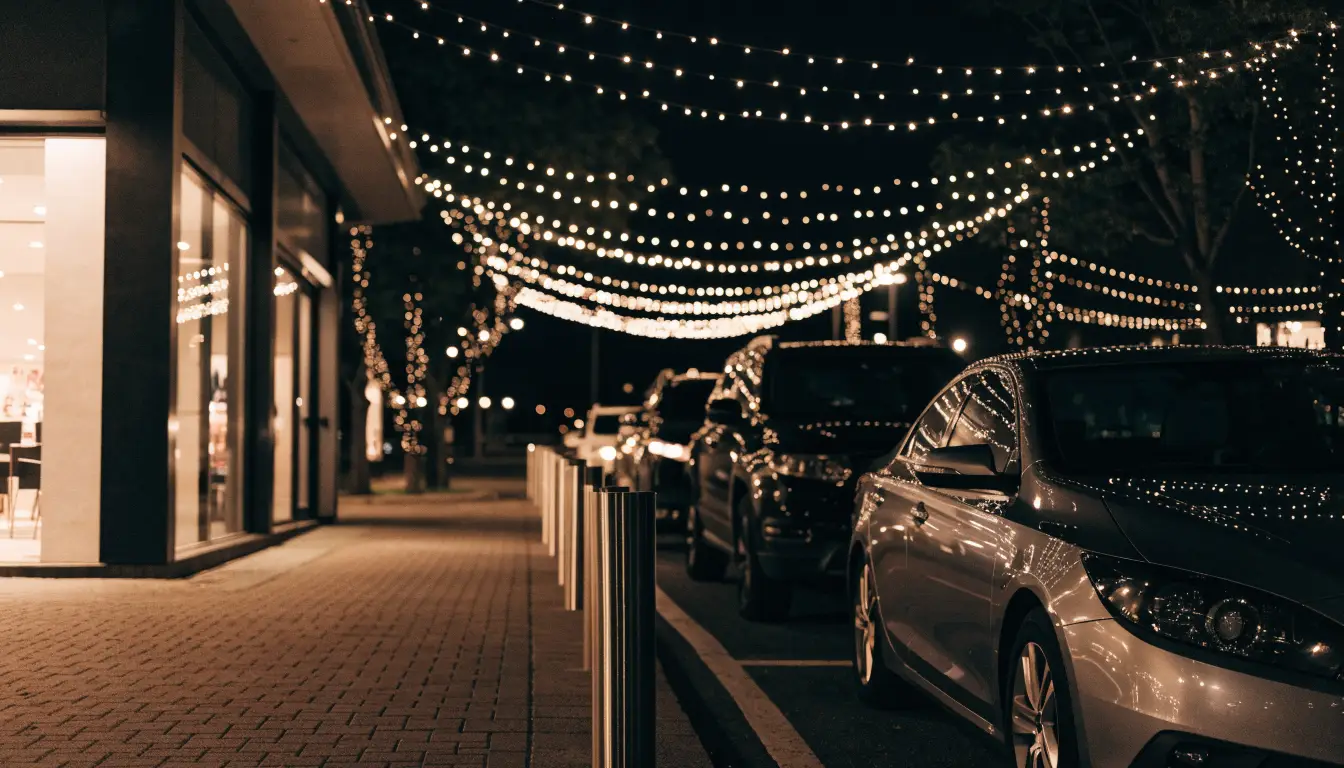
Anatomy of a pickup-zone crash
A driver watching the app instead of the curb; a passenger stepping between parked SUVs; a third car threading the pickup lane at through-traffic speed. Hypothetically: a driver spotting their ride mid-block could stop dead in the live lane — and the rear-end that follows involves a rideshare in Period 2 or 3, a $1M policy, and a coverage analysis nobody at the scene understands yet. The framework for that analysis is the coverage-periods guide.
Why this district specifically
Victoria Gardens draws the trifecta: destination volume (unfamiliar drivers hunting addresses), nightlife hours (impairment plus fatigue), and event surges from the Epicenter's game nights spilling up Rochester Avenue and Day Creek Boulevard. Surge pricing pulls in more drivers exactly when conditions are worst — economics writing the crash calendar.
The victim's local advantages
- Cameras everywhere — the retail district and its parking structures are among the most-observed real estate in the city. Footage cycles in days: canvass the same week.
- App timestamps — every rideshare involved carries GPS-logged trip data that reconstructs the scene.
- Witness density — pickup zones are full of waiting people holding phones. Get numbers before the crowd disperses.
If it was you
Passenger, pedestrian, or the struck car — the City of Rancho Cucamonga's corridors here funnel claims through the same steps: police report, same-day medical check, camera canvass, no recorded statements. Passengers should read their specific playbook; everyone else starts with a free case review before the district's footage cycle erases the easy version of proving what happened.
We also help injured people in: North EtiwandaRancho EtiwandaRochester