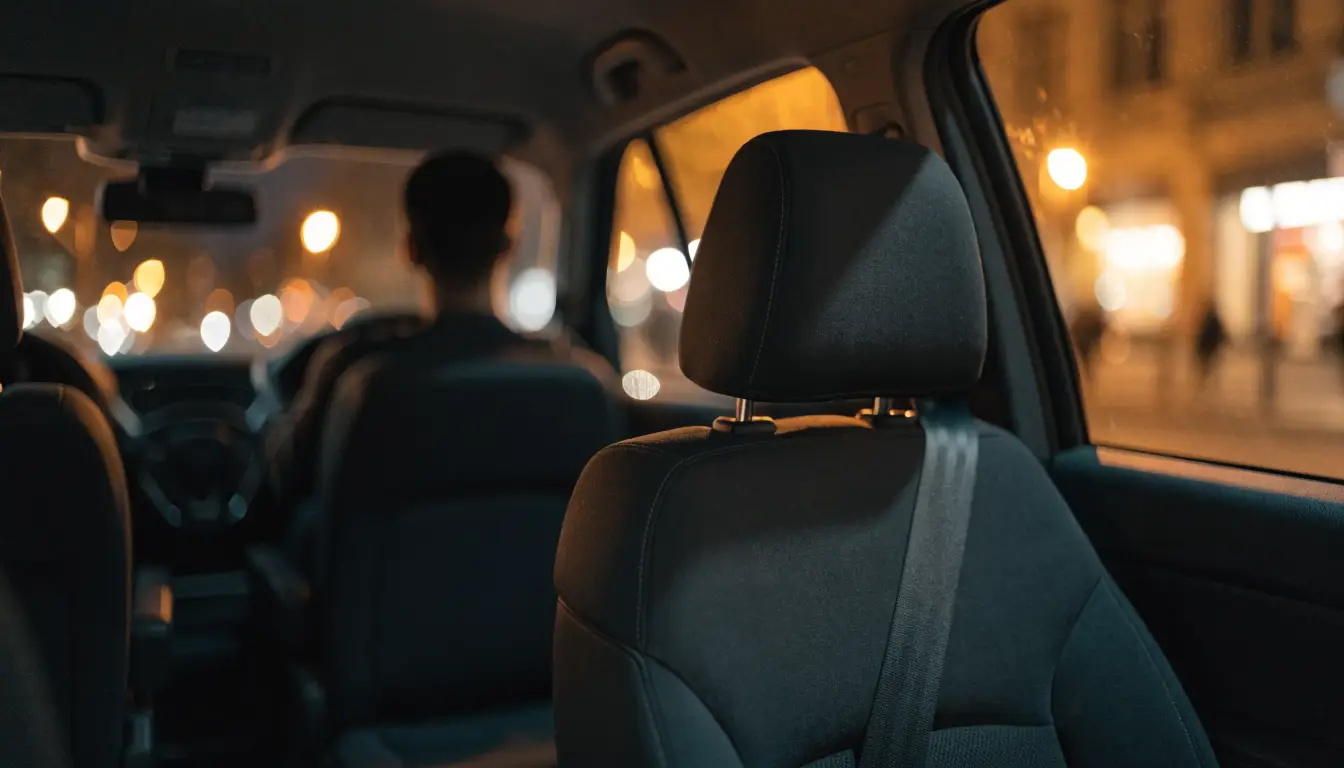
Why passengers hold the cards
Every injury claim gets discounted by fault arguments — except yours. A passenger didn't choose the speed, the route, or the gap; comparative negligence has nowhere to land. That single fact removes the discount machinery that shrinks most claims, which is why passenger cases resolve closer to full value than any other category — when they're documented like it. From Rancho Etiwanda to the rest of Rancho Cucamonga, the pattern is the same.
Your claim targets, in order
- Your driver erred (Periods 2–3): the TNC's $1M commercial policy responds.
- Another driver caused it: their liability policy is primary — with the TNC's UM/UIM tier behind it if they're uninsured or thin.
- Shared fault between drivers: you claim against both by percentage — their fight, your recovery.
The mechanics of the periods and tiers live in the coverage-periods guide; as a passenger you mostly need one fact — your trip receipt is period-proof.
The five passenger moves
(1) Screenshot the trip — receipt, driver, route, times — before the app buries it. (2) Report in-app promptly; it creates the TNC's own record. (3) Get medically checked the same day; passenger adrenaline hides injuries too. (4) Give facts to the police report and no recorded statements to anyone's insurer. (5) Decline every early release — with multiple policies in play, signing one insurer's quick check can strand the rest of the claim.
The complication worth knowing
Multi-policy claims mean multi-insurer finger-pointing — each carrier delays, hoping another absorbs the loss. Passengers get treated as leverage in a fight they didn't create. That's the cue for representation: a passenger claim with an attorney behind it typically jumps the queue, because everyone's math changes when the cleanest claim in the room can also try the case.
We also help injured people in: Red HillDay CreekDeer Creek