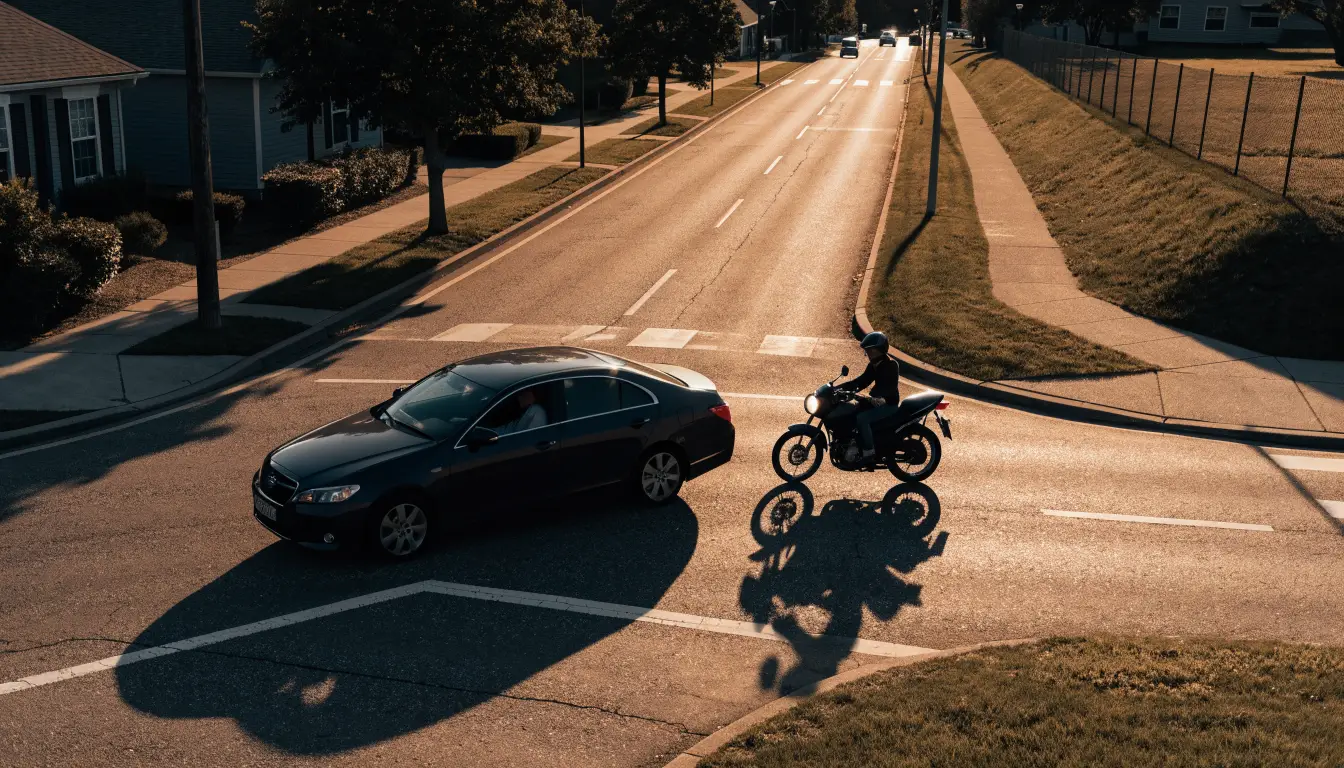
Why this crash dominates rider injuries
Riders present a narrow frontal profile that drivers' brains genuinely mis-time — the phenomenon riders call SMIDSY (“sorry mate, I didn't see you”). Add Rancho Cucamonga's signal-dense arterials — Foothill, Base Line, Haven — where every cycle serves stacked left-turners against through traffic, and the geometry writes the casualty pattern. Visibility failure explains the crash; it never excuses it. We see it constantly in crashes reported from Day Creek.
The law: §21801 is the rider's statute
The turning driver must yield to all oncoming traffic close enough to be a hazard, and must keep yielding throughout the turn. There's no motorcycle exception, no “it was hard to see” proviso. When the defense argues rider speed, they're arguing a comparative percentage against a statutory presumption — a discount fight, not a fault reversal.
Proving the three seconds that matter
- Signal timing and cameras — arterial intersections are heavily observed; footage settles gap-timing arguments instantly and cycles away in days.
- The car's own data — modern vehicles log speed and braking; the turning car's EDR can prove it never braked before the gap.
- Crush and throw analysis — impact points and distances reconstruct closing speeds better than any witness's guess.
- The turn context — a driver racing a stale yellow to beat oncoming traffic is a fact pattern juries recognize.
After the crash
These cases carry serious injuries and clean liability more often than any other rider crash — which makes them the cases insurers most need to discount early. Decline the recorded statement, preserve everything, and get the intersection canvassed within the week. Both the biker-bias dynamics and the negotiation arc continue in the insurer-tactics guide — and a free case review starts the preservation clock the same day.
We also help injured people in: Deer CreekNorth EtiwandaRancho Etiwanda