What §21950 actually requires
Drivers must yield to pedestrians crossing within any crosswalk, slow down approaching them, and — the clause everyone forgets — exercise due care for pedestrians at all times, crosswalk or not. Pedestrians have a duty not to step suddenly into a vehicle's path, which is where insurers aim their arguments. But the structural tilt of the statute is toward the person on foot, because the legislature understood the physics: there is no fair fight between a person and a car.
The unmarked crosswalk nobody knows about
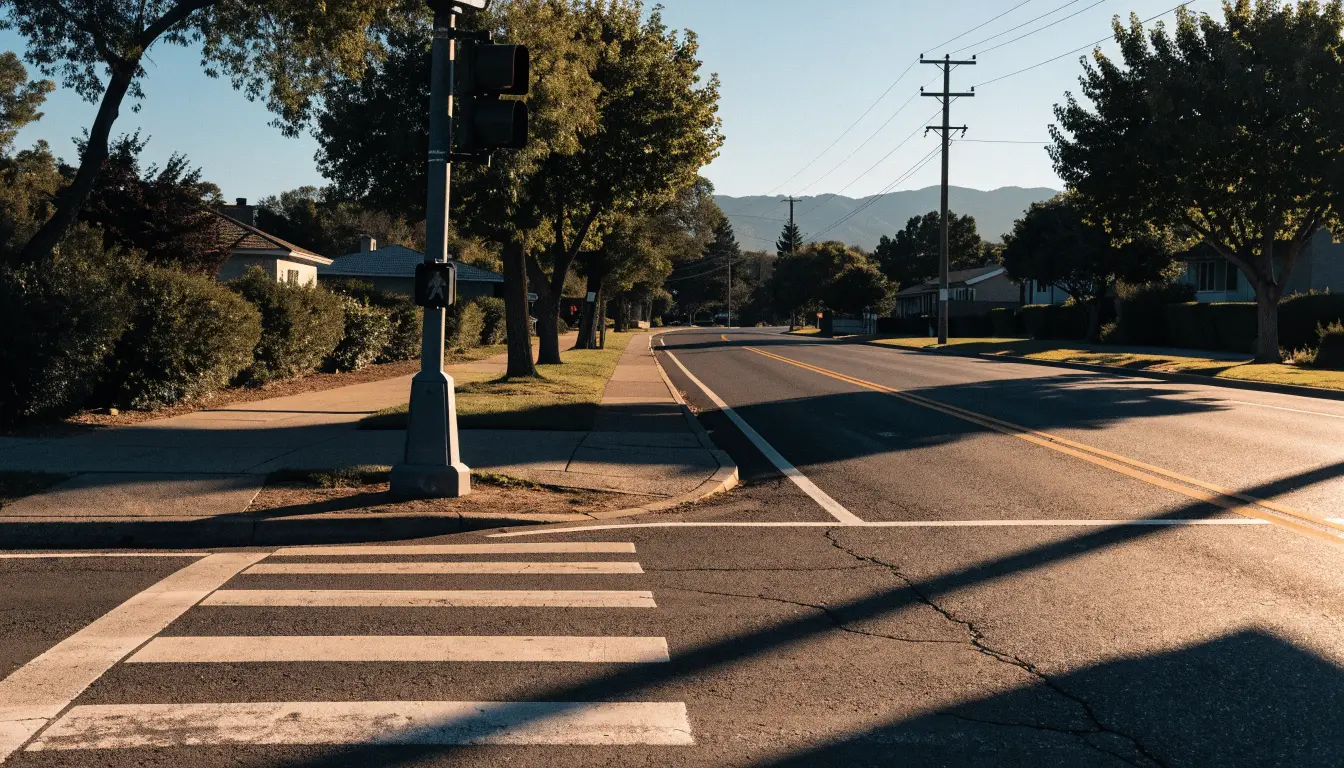
Every intersection where roads meet at roughly right angles contains legal crosswalks across each leg — painted or invisible. On Rancho Cucamonga's long residential blocks off Base Line or Archibald, a person crossing at an unpainted corner has the same §21950 protection as at a signal. Adjusters routinely treat unmarked crossings as “jaywalking”; the Vehicle Code says otherwise, and knowing that single fact re-prices many claims.
Where these crashes happen here
The pattern concentrates where arterial speed meets foot traffic: the school windows along Base Line, retail driveways on Foothill's corridor, trail crossings, and the signal-dense miles around Terra Vista and Victoria Gardens. federal pedestrian-safety data has run grim for a decade — turning drivers looking left while rolling right remain the classic mechanism, and the injuries land on the unprotected party every time.
What to do after a crosswalk strike
If a car hit you in a Rancho crosswalk, protect the claim:
- Get the police report and photos of the crosswalk and signals.
- Seek immediate care even if you feel you can walk away.
- Don't speculate to the driver's insurer about how you crossed.
- Keep every medical bill and follow-up record.
What to do if it was you
Same-day: police report, medical evaluation, photos of the crossing (paint, signals, sight lines — the City of Rancho Cucamonga maintains them and design can matter), witness numbers. Same-week: camera canvass before footage cycles, and no recorded statements — “the pedestrian darted” is the entire defense playbook, and your words are its raw material. Your own auto policy's UM coverage may protect you even on foot — a fact that rescues cases where the driver fled or carried nothing. From there, the claim runs like any injury case, with better-than-average liability: get it valued by a pedestrian injury attorney before an adjuster prices your crossing for you.
We also help injured people in: Terra VistaVictoriaRed Hill